
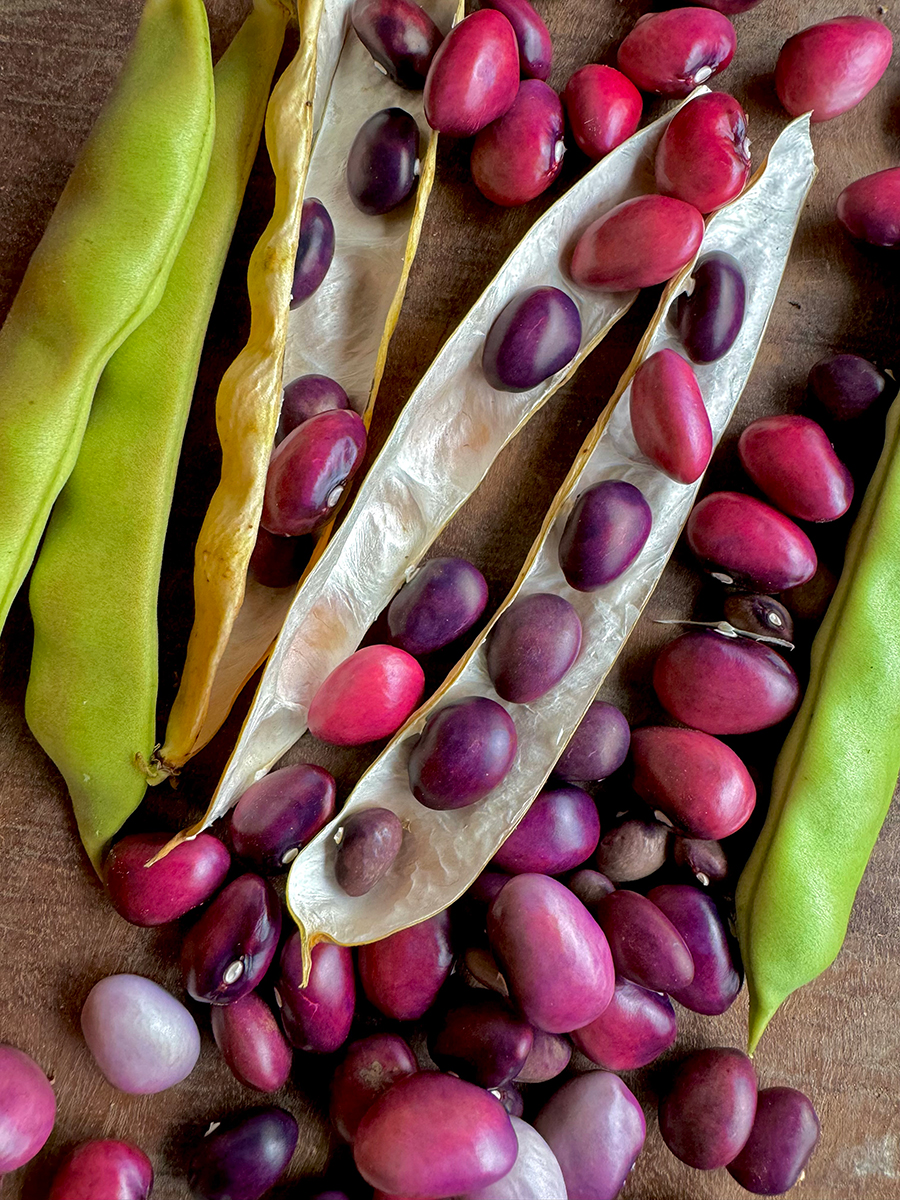
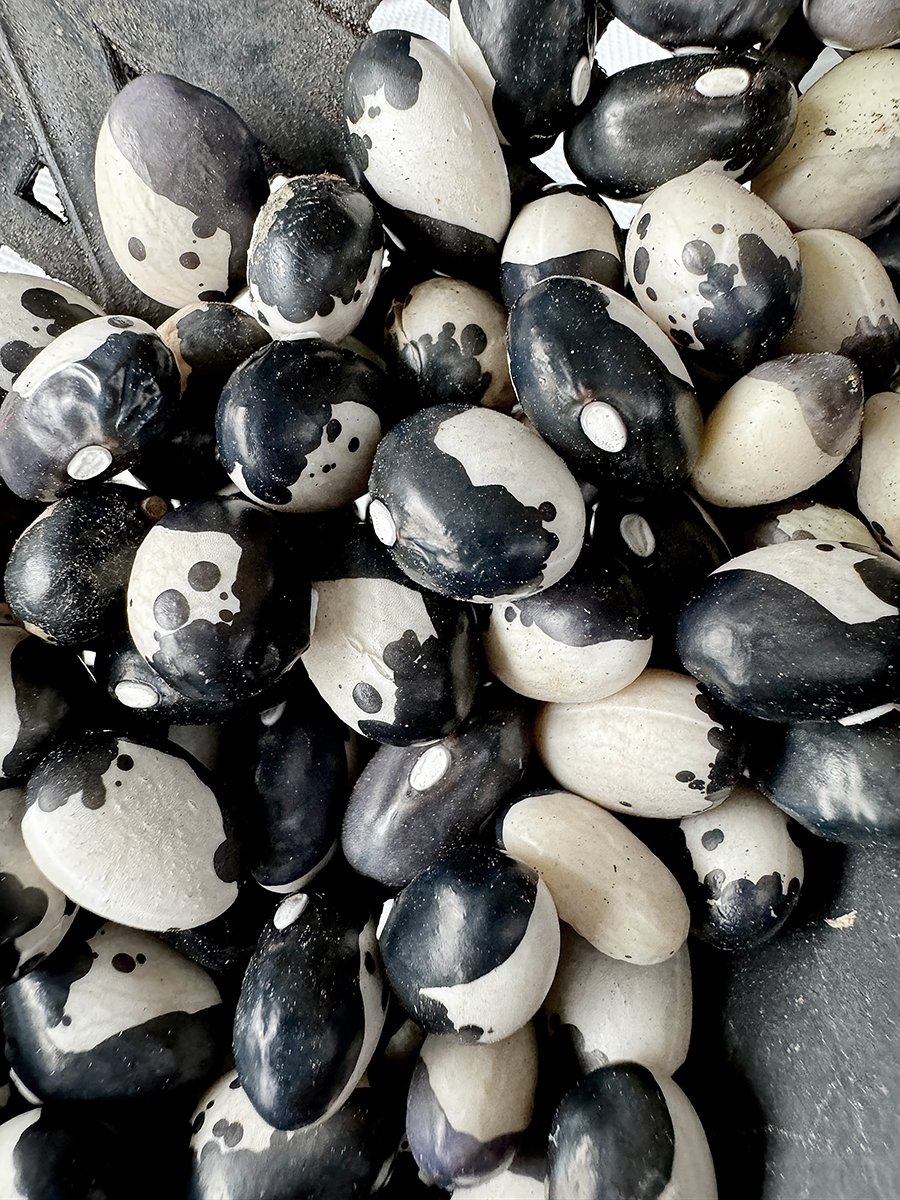
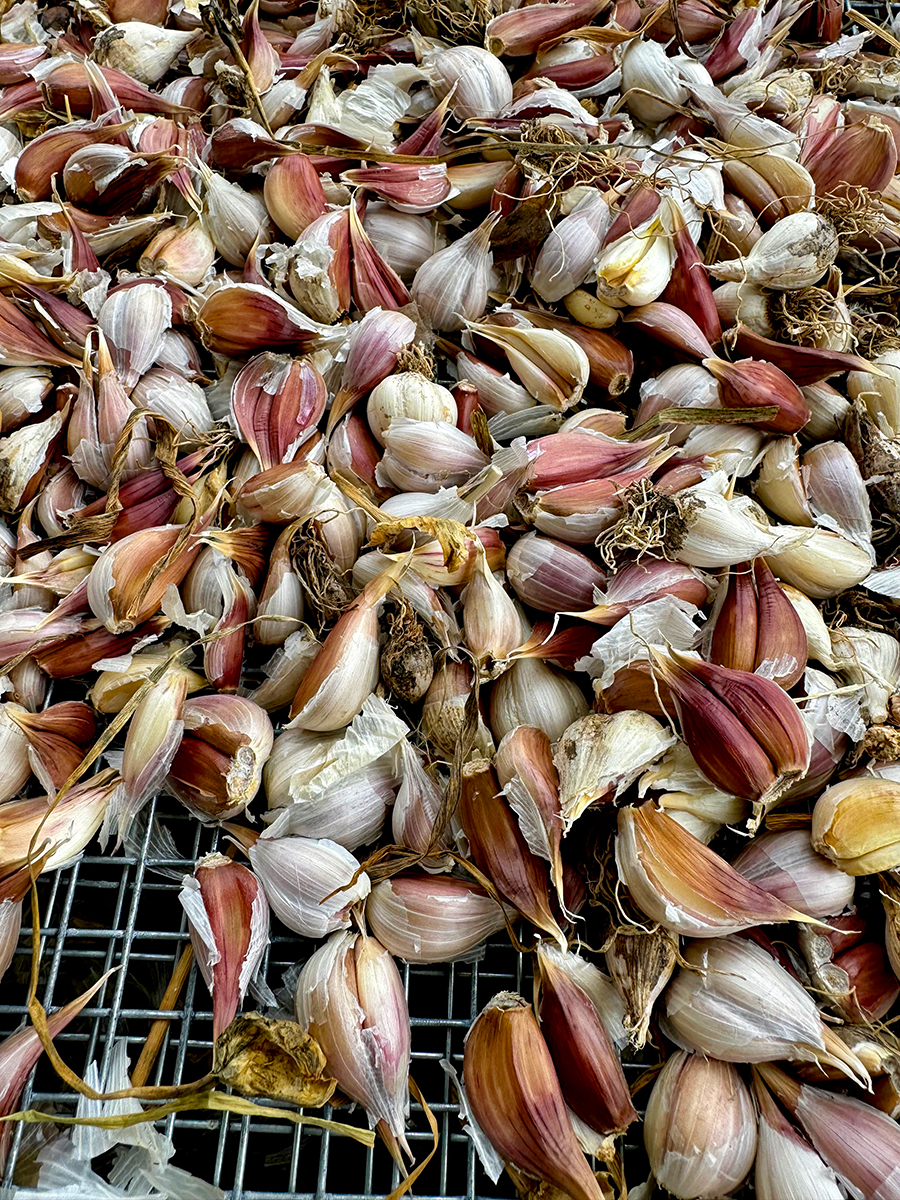
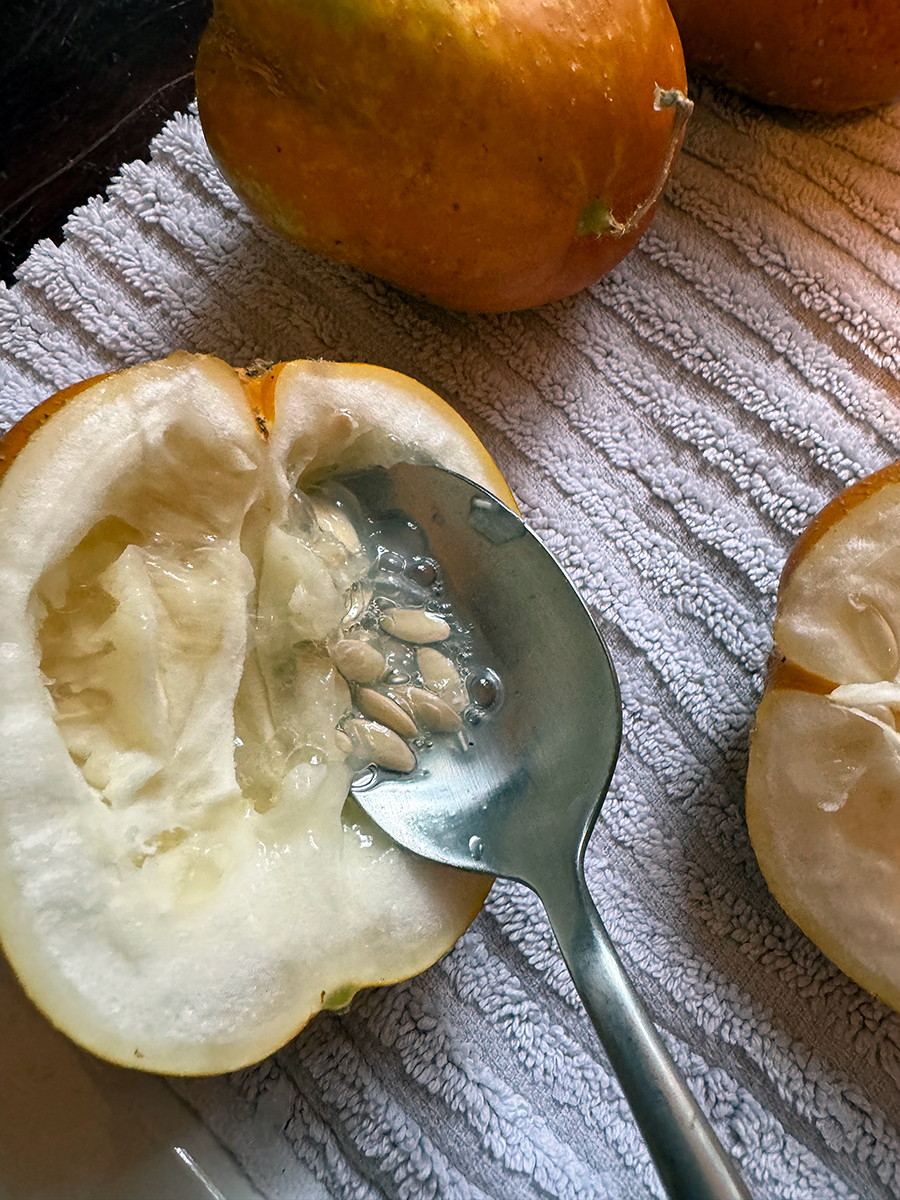

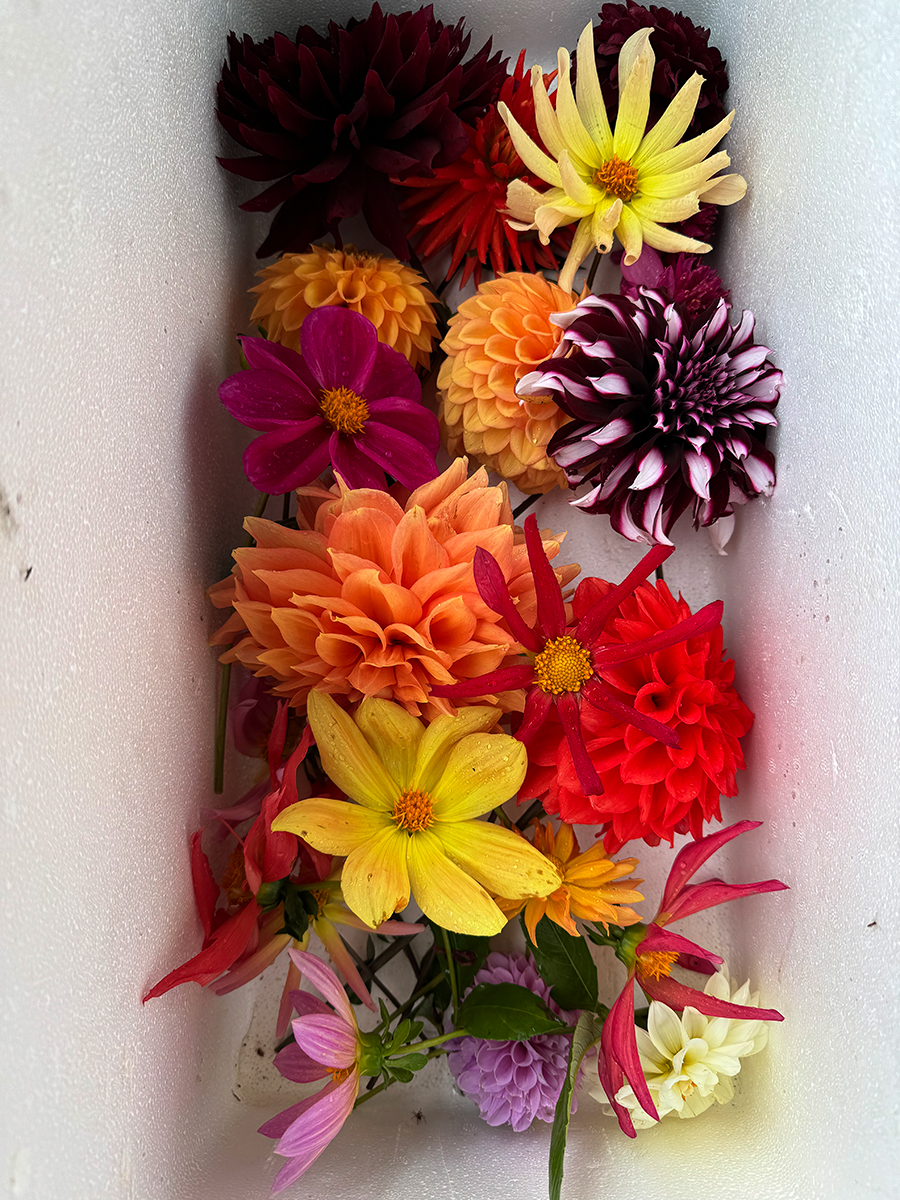

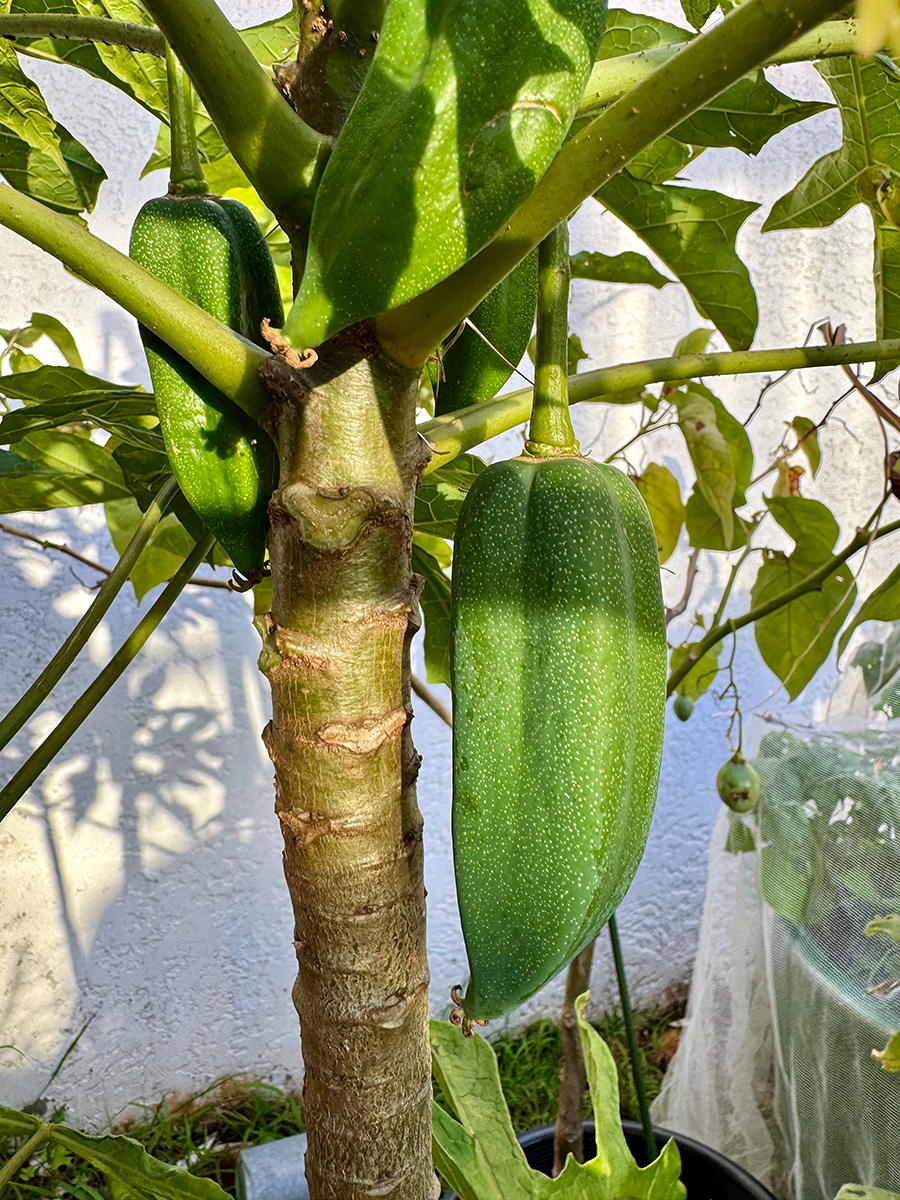
The long slow Autumn continues in the Blue Mountains and the seed saving work gets more furious in activity. This time of the year means we are doing it all – harvesting, processing and planting out new crops. There is so much happening! for example… all of the beans are coming to an end and slowly ripening. Here we see two attractive varieties with interesting histories. A Black Sea Bean – one of many un-named heritage varieties that are grown to make Turkish Kuru fasulye or stewed bean dish with tomato and onion. It changes colour dramatically as it dries from the pod from a pale purple to a bright crimson red through dark purple to almost black. Yin Ying or Calypso is a bean form the Caribbean area that has a striking black and white pattern and has traditionally been used as a dry bean for fish soups and stews. It’s prime garlic planting time here atm in the mountains and most varieties should be going in right now right up till the end of April & May. Shown here is a North Korean Glazed Purple Stripe variety called ‘Pyong Vang’ which has a rich warm intense flavour and is a reliable grower in this cool climate and with our latitude and day lengths. Much of the summer fruit will have ripened and is now ready to harvest the seeds from like the heritage Richmond Green Apple Cucumbers shown here. They change colour when ready to extract the seeds and usually need to be fermented a little in water to remove the growth inhibitors in the gel that surrounds the seeds – then drying them out on a sieve or piece of mesh. Using a mesh surface means they don’t get stuck as they dry out and are easier to collect up and store after. Apple shaped cucumbers were brought to Australia in the mid to late 1800’s from China – most likely by migrant workers in the Gold fields – and then became popular here and selected into a range of colours which then were released and sold by Seed Companies. Hops vines are at the end of their run for the summer and the hops flowers are harvested as they ripen and dry out covered in sticky lupulin pollen. These vigorous vines die back and grow back from the ground every year. They are an entertaining vine to grow in a backyard and will cover a large structure with attractive leaves in no time at all. Dahlias were originally a reliable food plant where the tubers were eaten like potatoes. The newer varieties tend to not taste very pleasant anymore as they have been selected over many years for flower colour and shape rather than tuber taste. They are fairly quick and easy to grow from seed and produce a huge range of plant and flower variation when you do it. It’s a fun home garden project to try. Now is also the time to look at planting out potatoes again – there is usually a later summer burst of growth here in the mountains in the late summer/autumn period and there should be plenty still in the ground from the summer crop. Shown here is a cluster of tubers that were grown from last year’s potato berry fruit as seeds (True Potato Seed – TPS). This unnamed variety is from the diploid species Stenotomum which usually has wonderful flavours, textures and colours. And lastly we see a Babaco plant with many fruits currently forming. Babaco – Vasconcellea × heilbornii. This is a cross between a Mountain Papaya and a Toronche. They will continue to develop and ripen through our comparatively cool but mild winters here. Often fruits and plants from other higher elevation mountainous areas in the world will grow well here in the Blue Mountains. We only ascend to about 1100M (3000+ ft) on the highest elevations and have a temperate to cool climate, but can often grow plants well that originated from higher climes due to our day lengths and light levels.
It’s that time again!
This is just a quick reminder that the next scheduled meeting for the year 2024 of the Mid Blue Mountains SeedSavers is on at the Bullaburra Progress Hall this coming weekend.
Sunday 14 April 2024 from 10 am till Midday
Help celebrate the Blue Mountains SUMMER!
For this meeting we will be again focussed on the actual mechanics of seeds saving and will be going over some of the actual physical activities involved in processing seeds to extract them and check they are fully ripe and ready to save. So bring along your seed stalks or pods and we can discuss them and what’s required to get them ready to sow or store for the next season. We will have some suitable equipment like various graded sieves available to use and demonstrate.
This will be a continuation of our last meeting working our way through the various plant family groups and examining in more detail how seed harvesting and processing works best for the various types of seeds we grow.
Come along and talk about growing things with like minded people.
Hope to see you there celebrating the current productive growing season!
The address for the Mid Blue Mountains Seedsavers website is:
https://midbluemountainsseedsavers.org/
We do now have a Facebook page as well:
https://www.facebook.com/Mid-Blue-Mountains-Seed-Savers-1629533990602860/
These regular notifications are sent out directly from the website if you subscribe to that email notification list.
 Mid Blue Mountains Seed Savers